

Practical Pathways to Community Asset Transfer (of Ownership) of Green Spaces
Poorvi Kulkarni (MRes Public Policy Research, University of Glasgow)
In the context of green spaces, community asset transfer of ownership is fraught with added complexities. With increased financial pressures on Local Authorities, open land and green spaces are commercially sold or developed to generate capital receipts. This is unlike the case with built assets wherein public sector austerity leads to transfer of ownership or management to communities.
None of the four urban Local Authorities of Glasgow, Edinburgh, Dundee, and Aberdeen have transferred ownership of green spaces to community bodies under the Community Empowerment (Scotland) Act 2015. In Glasgow, which is the most populated city in Scotland and is reeling under an acute housing emergency, the national goal of increasing community landownership clashes with the city-level need to supply land for housing. So how should urban communities seeking to own natural green spaces practically pursue their aspirations in the face of urban governance that needs to embed community participation? Creation of bespoke and contextual knowledge and support to address heightened challenges encountered by urban communities planning ownership of green spaces offers a solution.
In an exploratory feasibility study for The Children’s Wood—a community body in Glasgow—case studies of three other community bodies (situated relatively near Glasgow), which have acquired ownership of natural green spaces, are developed. The Children’s Wood holds lease over a 1.4-hectare green space, called The Children’s Wood and North Kelvin Meadow, under the Community Empowerment Act and is exploring ownership of the space for long-term security.
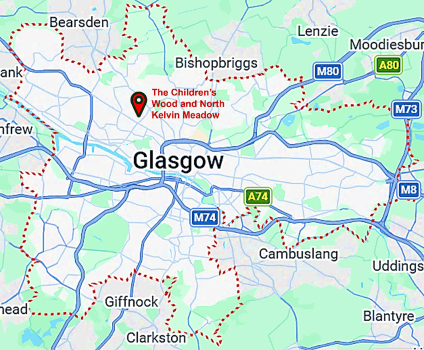
Given the conflicting policy priorities concerning land use, urban community bodies like The Children’s Wood need to make a stronger case and application for landownership. Experiences of Douglasdale Recreation, Environment, Access, and Leisure (REAL) Group in South Lanarkshire, Inchinnan Development Trust in Renfrewshire, and Crail Community Partnership in Fife bring together key transferable insights.
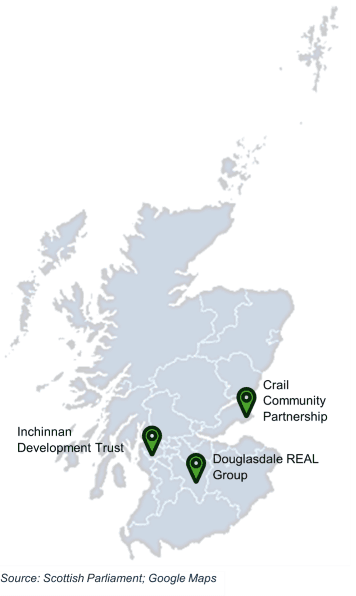
The case studies bring out crucial considerations and strategies on governance, finance, and community support. These include strengthening the governing document, identifying localised funding, making the Stage 1 application early, and formalising community engagement. Producing replicable knowledge through peer learning benefits urban communities exploring asset transfer of ownership of green spaces.
Further research on aligning community landownership with local planning priorities is also important. Creating a Local Place Plan under the Planning (Scotland) Act 2019 would provide urban communities exploring ownership of green spaces a way of working with Local Authorities that syncs with national and local planning outcomes. Analyses of local planning documents and how asset transfer requests of ownership by communities can add value to urban planning goals would enhance and sustain community ownership of green spaces.
For the full dissertation, please access the link on the Community Woodlands Association website: https://www.communitywoods.org/research-reports
For more information, please contact Poorvi Kulkarni on poorvikulkarni06@gmail.com